While most of us are familiar with our zodiac signs or birthstones, many are not aware of the existence and significance of birth flowers. Just like zodiac signs, birth flowers carry their very own unique meanings, adding an extra notch of thoughtfulness when selecting birthday blooms. Whether you're in search of the perfect birthday bouquet or a special floral arrangement for any occasion, understanding the characteristics associated with each month's birth flower can be incredibly helpful.
Join us on a journey through the floral calendar as we explore the meanings behind each month's bloom – a perfect guide for those seeking the ideal floral gift!
What are February’s birth flowers?
Despite Valentine's Day taking centre stage in February, it might be surprising to discover that the red rose is not the designated birth month flower for this romantic month.
- Flowers: violet and primrose
- Symbolism: Loyalty, faithfulness, wisdom.
- Personality traits: Gentle, wise, and loyal.
What do violets symbolise?
Violet stands out as one of the first plants to bloom in the spring. Characterised by pretty heart-shaped leaves and asymmetrical flowers, violets display a diverse range of colours. While many are violet coloured, staying true to their name, others come in shades of blue, yellow, white, and cream. A fascinating feature is the occurrence of bicolored violets, notably combining shades of blue and yellow in a single bloom.
So, what do these pretty flowers symbolise?
-
Faithfulness & loyalty: In Greek mythology, violets were associated with faithfulness and loyalty. Legend has it that Zeus transformed his mortal lover Io into a heifer to protect her from his wife Hera, and Io grazed on violets during her time on Earth.
-
Spring & new beginnings: As one of the early bloomers in spring, violets are also associated with the arrival of the season and the idea of new beginnings.
-
Symbol of female love: Violets hold importance for women in the LGBTQ+ community, where they are sometimes used as a symbol of love between women.
What do primroses symbolise?
Primroses symbolise various meanings, often associated with positive and uplifting sentiments. Here are some common symbolisms attributed to primroses:
-
Youth & new beginnings: Primroses are often seen as symbols of youth and the promise of new beginnings. Their vibrant colours and early spring bloom contribute to the association with the freshness and vitality of youth.
-
Love & affection: Similar to violets, primroses are considered symbols of love and affection. They are often exchanged as tokens of appreciation and fondness.
-
Hope & optimism: The early blooming nature of primroses, often heralding the arrival of spring, makes them a symbol of hope and optimism. They represent the anticipation of brighter days and the end of winter.
Blooming Artificial alternatives to February blooms
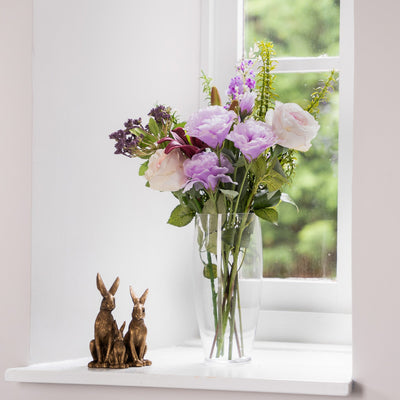
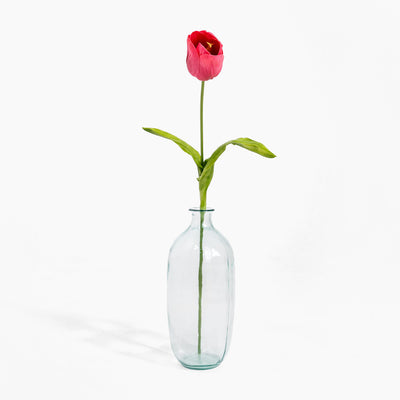
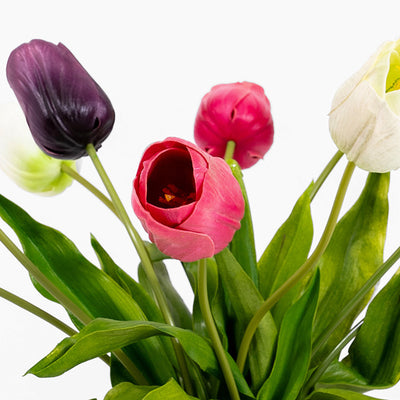
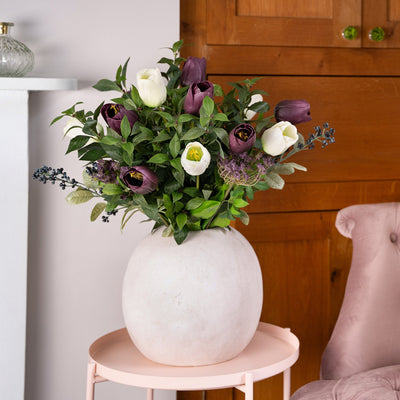
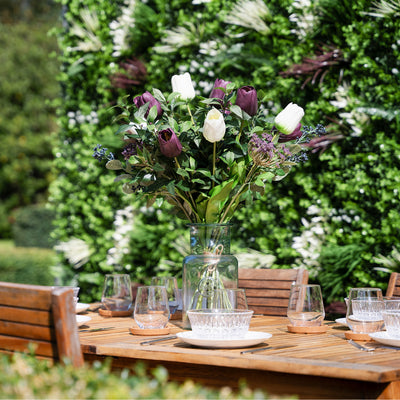
An alternative to violets if you’re looking to symbolise loyalty, are tulips, we'd recommed in purple! These pretty, purple blooms are the perfect way to show your commitment and are availabe in a larger bouquet too: twilight bouquet. If you want to stick to a softer purple theme, representing love and loyalty our lilac flower arrangement fits the bill nicely.

And there we have it – our top tips for celebrating those born in February! Wondering what your birth flower is? Discover more information in our blog post birth month flowers & artificial alternatives.
 £1.50 stem offer
 30 day returns
 Free delivery over £100
 Rated 4.8 / 5