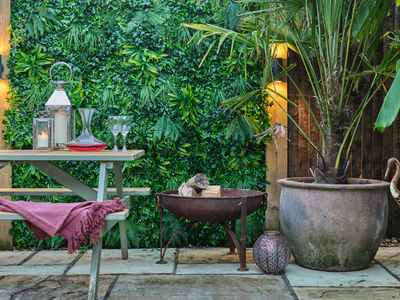
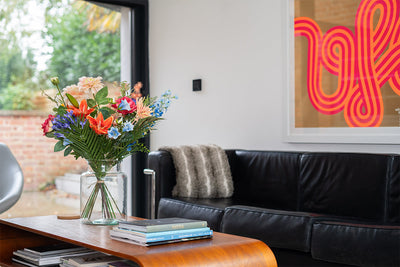
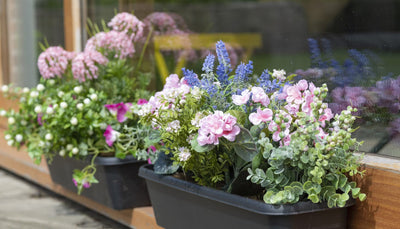
Create your very own green zen space, hanging plant utopia or exotic bathroom spa with our lifelike artificial plants. Have fun creating instant updates and placing greenery wherever you want it without any of the hassles of caring for real plants.
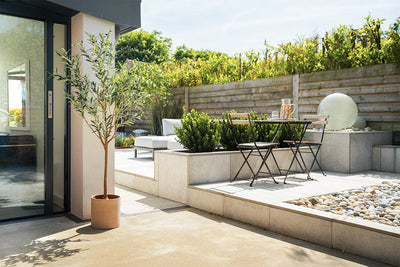
Whether you want to create a jungle outdoors or indoors, our wide range of artificial trees has been crafted to perfectly mimic nature – even up-close.
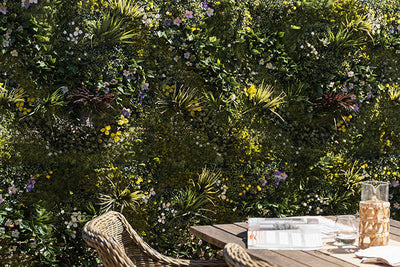
Screening doesn't have to be dull. Shop our range of artificial plant screening options to beautify your fencing, add privacy to intimate areas of your garden or mask unsightly spots.
Finishing touches like pots and planters will make a huge difference to your artificial plants, trees, and flowers. A pot will help the plant blend (or stand out) into it's new home and it'll improve stability too.
What could be better than unpacking your stunning new artificial plant, positioning it in pride of place and it looking absolutely perfect? Knowing you got yourself a bargain! Check out our special offers including our famous weekly wonders.
Ever wonder what artificial flowers are made from and which materials make them look and feel the most realistic?
This guide explores the most commonly used materials to make artificial flowers, from plastic to premium fabrics like silk and polyester, while breaking down the different types of flowers and the pros and cons of each material.
With over 10 years of industry knowledge, Managing Director Alick Burnett gives his insight into which materials are used to make artificial flowers and why.
Polyethylene, or PE, is a multi-use, recyclable plastic used to create various everyday items.
It’s particularly popular in manufacturing as it’s super tough, chemical resistant, water resistant and flexible, so it’s an excellent choice for creating durable artificial plants and flowers.
Polyethylene comes in various forms, including high-density (HDPE) which is stronger and more rigid, and low-density polyethylene (LDPE) which is more flexible. The latter of the two is often used to create artificial flowers, including the petals, leaves and stems. - Alick, managing director and artificial flower industry expert.
LDPE is usually used to create strong petals and leaves that hold their shape, and is often used in injection moulding. It’s similar to PEVA (which we’ll get on to shortly) as it’s ideal for making waxy flowers, like faux lilies. The difference is that it has a less shiny appearance and is more UV stable than PEVA.
The downside to polyethylene is that it’s fairly susceptible to UV degradation; that is, it can turn a funny shade of blue in the sun after long periods of time. Fortunately, it’s possible to apply UV stabilisers to the plastic, which vastly extends its lifespan and is something we add to our outdoor artificial trees.
And while polyethylene is recyclable, it generally isn’t biodegradable, which is why we encourage our customers to gift their faux plants and flowers to friends or donate them to charity when they’re no longer in need of them.
Pros & cons of polyethylene
Pros - Strong, chemical resistant, water resistant, flexible and recyclable.
Cons - Susceptible to UV degradation and not biodegradable.
PEVA - Polyethylene vinyl acetate
Polyethylene vinyl acetate is an alternative to PVC and is used to craft artificial flowers. It’s considered more environmentally friendly than PVC as it doesn’t contain chloride or phthalates, and releases fewer volatile organic compounds.
Despite that, it shares many of the same properties as PVC, including waterproofing and durability, making it ideal for creating strong artificial flowers that are suitable for outdoor use, like our faux outdoor hanging baskets.
There are several downsides to PEVA, however. One is that it isn't ideal for high-temperature moulding as it tends to soften around 60-80°C. It’s also sensitive to sunlight and has a slightly higher cost compared to other materials like polyethylene and PVC.
When used to make artificial flowers, PEVA is perfect for replicating flowers that naturally have a waxy feeling like anthuriums, orchids, tulips and lilies, where it can grant them a brilliantly lifelike look and feel. - Alick, managing director and artificial flower industry expert.
- Alick, managing director and artificial flower industry expert.
Pros & cons of PEVA
Pros
Cons
No chloride or phthalates
Not suitable for high temperatures
Releases fewer volatile organic compounds
Sensitive to sunlight
Water-proof
Costs more than polyethylene and PVC
Strong
Replicates a natural, waxy texture
Polypropylene
Polypropylene is commonly melted and injected into moulds to form petals, leaves, stems and other parts of artificial flowers.
It tends to hold its shape well and is strong but lightweight - everything you need to make beautiful flowers!
It’s usually hand-coloured with pigment or printed with floral vein patterns for a highly realistic look.
That said, it can sometimes deform with high heat and doesn’t feel quite as natural as PEVA.
Pros & cons of polypropylene
Pros
Cons
Strong
Not suitable for high temperatures
Lightweight
Not as natural-looking as PEVA
Holds shape well
Latex
There are two types of latex - natural and synthetic. Natural latex is harvested from certain plants like rubber trees and is biodegradable. Synthetic latex is man-made and more chemical-resistant than natural latex.
When making artificial flowers, latex is either poured or sprayed into moulds for petals and leaves. It can also be used by dipping leaves into the polypropylene to give them an authentic, waxy feeling - perfect for orchids and lilies.
Latex is more expensive than fabric or plastics, so it’s usually used for more luxurious faux flowers to give them that extra touch of realism. There’s also the downside that some people are allergic to latex.
- Alick, managing director and artificial flower industry expert.
Latex is more expensive than fabric or plastics, so it’s usually used for more luxurious faux flowers to give them that extra touch of realism. There’s also the downside that some people are allergic to latex
Pros & cons of latex
Pros
Cons
Natural latex is biodegradable
More expensive than fabric or plastics
Man-made latex is chemical-resistant
Not suitable for those with a latex-allergy
Ideal for more luxurious flowers
PU - Polyurethane
PU is a polymer used to create everything from cushions and furniture to artificial flowers. It’s favoured for its flexibility, strength and ability to closely replicate fine details; while being lighter than latex.
There are various ways that polyurethane can be used to make artificial flowers. The first is as a PU foam, which can create soft, squishy petals and flower heads, often used for roses and peonies.
Another is to use it as a coating over fabric petals or foam bases to enhance their durability and water resistance, while adding a smooth, glossy finish, which works perfectly for artificial monstera plants.
It may also be used as an adhesive or binder for attaching petals to stems and securing them in place.
Pros & cons of polyurethane
Pros
Cons
Flexible
Not biodegradable
Strong
Sensitive to sunlight
Lightweight
Can degrade in high temperatures
Various uses in production
Can replicate fine details
Comparison of plastics for making artificial flowers
Polyethylene
PEVA
Polypropylene
Latex
Polyurethane
Affordable
✓
✓
✓
Water-resistant
✓
✓
✓
✓
✓
Realistic
✓
✓
Not as much as PEVA
✓
✓
Strong
✓
✓
✓
✓
✓
Sensitive to sunlight
✓
✓
✓
✓
✓
Chemical-resistant
✓
✓
✓
✓
✓
Flexible
✓
✓
✓
✓
✓
Recyclable
✓
✓
✓
Biodegradable
✓
Luxurious
✓
✓
Silk & polyester
Nowadays, it’s less common to use pure silk as it’s more prone to tears and fraying than other materials, plus it’s far more expensive, which makes the cost of the artificial flowers much higher for customers.
Polyester silk is a classic choice for creating soft, delicate petals that are durable and hold colour well, while being affordable for customers.
- Alick, managing director and artificial flower industry expert.
Polyester is typically used for dainty flowers like sunflower petals and peonies - anything with light, delicate petals.
It’s usually cut using heat stamping, die-cutting, or laser cutting and sealed with heat to prevent fraying before being properly shaped and assembled.
Pros & cons of polyester fabric vs pure silk
Pros
Cons
Create soft, delicate petals
Prone to fraying
Allows for intricate detail
Expensive
Flock
Flock is tiny little fibres which are added to the surface to create a soft, fuzzy texture. It’s usually made from polyester, cotton or another fabric material.
The idea of flock is to add extra realism to stems and leaves to perfectly mimic the natural flower.
- Amy, artificial flower florist
An example of this can be found on our faux poppy stem, which features flocked stems and leaves.
An adhesive is applied to the surface, then flock fibres are sprinkled on top. They’re sometimes added electrostatically, which uses static electricity to make the fibres stand upright.
Velvet
Velvet is usually reserved for Christmas artificial flowers, like poinsettias, to give them a touch of glamour! It’s traditionally made from silk, but today it’s more commonly made from polyester or nylon blends.
The only downsides of using velvet to make artificial flowers are that it’s costlier than other fabrics, harder to clean and can’t be used outside as velvet will absorb moisture and deteriorate.
Metal
This might be a surprising one, but metal is used in artificial flower production to provide structural support and flexibility.
It doesn’t tend to be used for petals or leaves, instead, it’s used within the stems of our artificial flowers so that you can bend them into a more natural arch shape and adjust your flower arrangements.
The wire is strong, providing necessary support, however, depending on the type of metal, it can rust when exposed to water if uncoated.
Dyes & colours
Artificial flowers are usually coloured by hand using pigment for the dye material, which is similar to textile dyestuff. They can also be coloured with dyes.
The difference between the two is that dyes can absorb directly into the material, which works well for fabric and silk petals, whereas pigments are better for non-porous materials like plastics and latex.
Leaves, on the other hand, can be colour printed by machine, as seen in the video below.
What are the benefits of artificial flowers?
We love flowers, both real and faux, but certain benefits come with going faux.
Cost savings
The biggest benefit of artificial flowers is the cost savings. While real flowers look nice for a week or two, they eventually meet their demise, get tossed in the bin, and then it’s up to you to pay for a new bunch.
With faux flowers, you might pay more upfront, but they’ll last you a lifetime.
- Sarah, artificial plant and flower expert
No more allergies
Then there’s the obvious benefit for those who suffer from hayfever. You no longer have to sacrifice owning beautiful flowers for the sake of a sniffly nose. By choosing a faux flower bunch, you can enjoy stunning blooms and stay allergy-free!
Not limited by the seasons
And even when your faux flowers are no longer in season, you can store them away and swap them for something more in keeping with the seasons, knowing full well that they’ll be just as gorgeous when you reintroduce them later.
Have questions about artificial flower materials?
If you have any further questions about artificial flower materials, get in touch with our team. Alternatively, check out our other blogs and articles
FAQ’s
Are all fake flowers made of silk?
No, not all fake flowers are made from silk.
Pure silk was once a popular material for making faux flowers, but it’s expensive, which makes the flowers more pricey for customers, and it’s prone to tearing and fraying.
Nowadays, polyester silk is used instead as it’s more affordable for customers and far more durable, resulting in a better quality product overall.
What are the materials used to make fake flowers?
There are also lots of materials used to make fake flowers. These include polyethylene plastic (PE), polyethylene vinyl acetate (PEVA), velvet, latex, metal, polyester silk and more.
The materials used will vary depending on the type of flower being made. For example, PEVA tends to be used to create waxy flowers, like anthuriums, tulips and lilies, whereas polyester silk is better suited to light, delicate petals.
What is the best material for artificial flowers?
The best material for artificial flowers depends on which type of flower you’re making. For flowers with soft, delicate petals, polyester fabric is usually best and allows for the most detail. If however, you’re making waxy leaves for orchids, polyethylene plastic is a versatile, affordable and strong option, which is often used for injection moulding.
Are fake flowers recyclable?
Certain materials, like polyethylene, are recyclable, but artificial flowers tend to be made up of a variety of materials for the different parts of the flower.
For that reason, we recommend that you gift your artificial flowers to a friend or family member, or donate them to charity when you no longer need them.
What is injection moulding?
Injection moulding is the process of adding molten plastic to a mould, which then forms the shape of the leaves, stem and various other parts of the plant.
What is UV stability?
UV stabilisers are added to certain outdoor artificial plants and trees in order to protect their colours from fading under harsh sunlight. This is usually designed to protect them for a minimum of one year, but it usually lasts far longer.
Be the first to hear about our offers and new arrivals, plus get a 10% off welcome bonus and exclusive subscriber-only deals straight to your inbox.
Choosing a selection results in a full page refresh.
Choose your country
Deliveries to areas typically considered outside of mainland UK including Northern Ireland, Scottish Highlands, Islands and Isle of Wight can take a little longer and charges may apply.
Proceed to checkout to calculate an accurate delivery cost.
We've handpicked some pots that will fit this plant, we try to offer some that will be a snug fit and some that are oversized (in case that's your preferred style choice). You can also add a potting medium of your choice for additional stability and a decorative topper to suit your style.
Our pot recommendations are based on:
Indoor or outdoor, an outdoor plant will need a pot with drainage holes so that when it rains it won't fill with water.
The size of the starter pot the plant comes in, we want to make sure the whole starter pot is covered by the decorative pot.
The size of the opening, (not just the overall pot width) if the starter pot can't physically get into the pot you'll have a problem.
And the height of the plant. Some of our taller plants have small starter pots so they could fit in a smaller decorative pot, but aesthetically the proportions wouldn't look right, so we size up to balance the look.
It is possible other pots will fit so please do get in touch for advice if you're considering other options.
 £1.50 stem offer
 30 day returns
 Free delivery over £100
 Rated 4.8 / 5