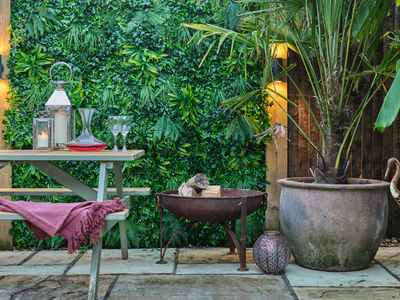
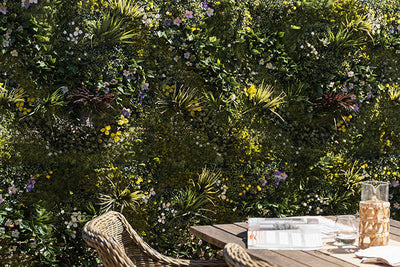
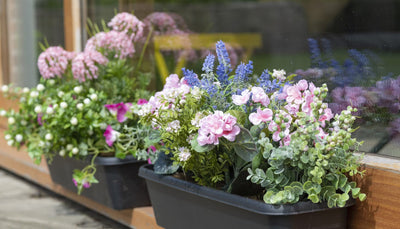
Create your very own green zen space, hanging plant utopia or exotic bathroom spa with our lifelike artificial plants. Have fun creating instant updates and placing greenery wherever you want it without any of the hassles of caring for real plants.
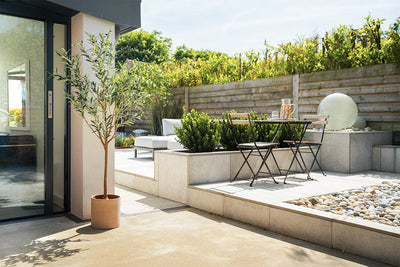
Whether you want to create a jungle outdoors or indoors, our wide range of artificial trees has been crafted to perfectly mimic nature – even up-close.
Screening doesn't have to be dull. Shop our range of artificial plant screening options to beautify your fencing, add privacy to intimate areas of your garden or mask unsightly spots.
Finishing touches like pots and planters will make a huge difference to your artificial plants, trees, and flowers. A pot will help the plant blend (or stand out) into it's new home and it'll improve stability too.
What could be better than unpacking your stunning new artificial plant, positioning it in pride of place and it looking absolutely perfect? Knowing you got yourself a bargain! Check out our special offers including our famous weekly wonders.
Gone are the days of suspiciously shiny leaves and crinkled paper petals. Thankfully, technology has come a long way in recent years and today’s artificial flowers have seriously levelled up!
Now, faux flowers are practically identical to the real thing with soft petals, textured leaves and vibrant, natural-looking colours, all while being wonderfully low-maintenance compared to real plants and flowers.
In this guide, we’ll go through how each part of an artificial flower is made. We’ll also include insights from our industry expert and managing director, Alick Burnett, who has been at the helm of Blooming Artificial for the past ten years and possesses a wealth of knowledge about the world of artificial flowers.
Making artificial flowers begins with solid research and planning. First things first, it's important to know which faux flowers are popular among our customers so that we can deliver your favourites. Whether you’re all about peonies or lean towards elegant faux orchids, we like to make sure that we have what you’re looking for!
Once we’ve established that, we carefully inspect the real flower. This involves getting up close and personal to study the shape of the stem, the intricate patterns and colour of the petals, details and veins on the leaves and more so that we can perfectly capture every little detail.
Next, we undertake 3D modelling with reference to the natural flower. By using all the information that we’ve gathered. Then we tweak, adjust and perfect the design to make sure that every petal, leaf and stem is just right.
In short, we don’t just make artificial flowers. It’s our specialist craft with every detail meticulously researched, modelled and designed to be exceptionally lifelike. Only after this process is complete will we actually begin to make our artificial flowers.
Petals
Choosing the right material
The magic of making artificial flowers begins with choosing the right material. This can depend on a few things, like whether the flower is designed for indoor or outdoor use, along with the specific type of flower.
To capture that signature waxy texture, flowers like tulips and lilies are usually crafted from foam or latex for a realistic finish. Whereas more delicate blooms like hydrangeas and geraniums tend to be made from polyester silk, which gives them a soft, fluttery petal look with all the intricate details. - Alick, artificial plant industry expert
When it comes to outdoor duty, our outdoor artificial flowers have to be able to stand up to sun, wind and rain, which is why we’ll sometimes use polyethylene plastic with UV stabilisers to protect them from fading in the sunlight or losing their charm after a rainy day. An example of this is our faux colour burst window box.
Artificial flowers that are specifically designed for outdoor use are typically only something that you’ll find from specialist companies (not to blow our own trumpet, of course! 🎺), so it’s worth checking before you buy.
Cutting to shape
Once the perfect material has been chosen, it might need to be printed, after which the petals will be cut to shape.
Back in the day, the cutting was all done by hand, needing plenty of patience and precision, but in recent years, more advanced technology means that the flowers are usually cut by machine, particularly in high-tech factories.
If the flowers are made from plastic, they will likely be injection-moulded and shaped by machine to create the desired shape, whereas flowers made from silk or foam will be cut using a die-cutting machine or similar. - Alick, artificial plant industry expert
To really nail the lifelike look, artificial flowers are usually dyed by hand. Why? Because this allows for better control and the ability to achieve specific colours, patterns and effects which can be tricky to replicate by machine. It’s important for getting that just-right shade of coral pink and subtle gradients.
Instead of using liquid dyes, faux flowers are typically coloured using pigments, which are fine, powdery substances that create colour when applied, similar to what is used in textile dyeing.
Pigments are chosen over other types of dyes as the colour is less likely to dissolve into the material and offers more vibrant colours that last far longer than your summer holiday tan! 🌞
Leaves
Printing & injection moulding
We like to make sure that the leaves on our blooms get just as much love and attention as the petals! Similar to the flowers, silk-based leaves are usually printed with realistic vein patterns.
Years ago, they would have been manually screen printed, but today, automatic four-colour roller printing machines are used to print the lighter, fabric-based leaves. - Alick, artificial plant industry expert
Not only does this make the process more efficient, but it means that there’s better consistency and quality across every flower and indoor faux houseplant.
Those thick, glossy, waxy-looking leaves? They’re often injection-moulded to give them a sturdier shape and more realistic texture. So instead of feeling like fabric, they’ll actually feel like natural flower petals with a soft touch finish.
Shaping
Leaves that are injection-moulded are often shaped at the same time by the same machine. It’s like a leaf spa treatment, only a little more industrial.
Shaping includes placing the leaves into a mould which presses all the lovely details like ridges and leaf veins, which are set into place, so they don’t come undone while sitting in your living room.
Printed leaves get the VIP treatment too! Once printed, they’re shaped using machines that add the finer details, giving them an ultra-realistic finish, because we all know that it’s those little things that turn ‘fake plant’ into ‘wait, is that real?!’
Stems & pots
Stems really are the unsung hero of the artificial flower world. They’re the glue that holds it all together and can make or break a flower's realism.
Oftentimes, artificial flower stems are injection-moulded to make them strong and to add all the little details to perfectly replicate their natural counterparts.
The stems resemble the natural flower as closely as possible, with different materials used for various flowers.
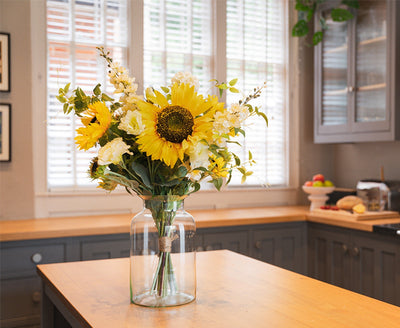
Sunflowers, for example, are made with a soft, slightly fuzzy finish to mimic natural sunflowers, whereas faux rose stems include tiny thorns (much less sharp than the real thing!), which add to the realism once you pop them in a vase.
If your artificial flower happens to include a pot, this will also be injection-moulded using polyethylene plastic to keep your flowers or flowering plant secure.
Inspection
Once all the pieces have been crafted and assembled, the process of making artificial flowers doesn’t stop there!
Strict inspections are undertaken throughout to ensure that the flowers are top-notch before they’re given the green light. - Alick, artificial plant industry expert
This includes a raw material inspection before manufacturing begins, an inspection of the machines to ensure that quality is consistent, plus an inspection once the artificial flowers have been assembled to make sure that they’re up to our super strict high standards! 🏆
Need more info on how artificial plants are made?
If you need a hand or have any questions about how artificial flowers are made, feel free to get in touch.
Artificial flowers are made starting with a research and design process in which natural flowers are studied and converted into 3D models.
The leaves, petals and stems of the flowers are manufactured using a variety of materials, including polyester silk, various plastics, and more, depending on the type of faux flower being made.
Artificial flowers are typically made by clever machines, although the flowers are usually dyed by hand to achieve botanically accurate patterns, colour gradients and finer details before being properly assembled. After manufacturing is complete, they’re closely inspected before they’re available to buy.
What are artificial flowers made from?
Artificial flowers are made from a variety of materials chosen to closely replicate the texture and appearance of real blooms. The materials used change depending on the type of flower.
For thicker, waxier leaves, foam or latex is often used to give them a highly realistic texture.
For thinner, more delicate petals, polyester silk is the go-to choice to allow for immense detail.
For further info, check out our article on what artificial flowers are made from (link to what are artificial flowers made from article).
What fabric are fake flowers made from?
Today, most fabric artificial flowers are made from polyester silk, which holds colour well and gives the petals a soft, fluttery look that blows gently in the breeze, just like natural petals.
They can also be made from velvet, but this tends to be reserved for Christmas poinsettias and other festive decorations.
What are the methods of making artificial flowers?
There are various manufacturing methods involved with making artificial flowers, these include both machine-based manufacturing and manual craftsmanship.
The most common artificial flower manufacturing techniques include:
High-tech injection-moulding machines: molten plastic is poured into a mould to form the basic shapes of leaves, flowers and stems.
Automatic four-colour roller printing machines: These machines are used to print leaves and other parts of the flower with exceptional detail.
Hand dyeing: To achieve natural colour variations and intricate details, artificial flowers are usually dyed by hand rather than machine, making sure that all the elements of a natural flower are included in the faux version.
Are fake flowers more eco-friendly?
It depends on your usage of faux flowers. If you are someone who buys a fresh bouquet every week, faux flowers are going to be easier on your bank account and the environment in the long run.
It’s worth remembering that not all fresh flowers are grown in the UK. The majority are flown in from around the world, so opting for flowers from your local supermarket every week may not be as eco-friendly as you once thought, and is something you may wish to weigh up when choosing whether or not to go down the faux flower route.
Be the first to hear about our offers and new arrivals, plus get a 10% off welcome bonus and exclusive subscriber-only deals straight to your inbox.
Choosing a selection results in a full page refresh.
Choose your country
Deliveries to areas typically considered outside of mainland UK including Northern Ireland, Scottish Highlands, Islands and Isle of Wight can take a little longer and charges may apply.
Proceed to checkout to calculate an accurate delivery cost.
We've handpicked some pots that will fit this plant, we try to offer some that will be a snug fit and some that are oversized (in case that's your preferred style choice). You can also add a potting medium of your choice for additional stability and a decorative topper to suit your style.
Our pot recommendations are based on:
Indoor or outdoor, an outdoor plant will need a pot with drainage holes so that when it rains it won't fill with water.
The size of the starter pot the plant comes in, we want to make sure the whole starter pot is covered by the decorative pot.
The size of the opening, (not just the overall pot width) if the starter pot can't physically get into the pot you'll have a problem.
And the height of the plant. Some of our taller plants have small starter pots so they could fit in a smaller decorative pot, but aesthetically the proportions wouldn't look right, so we size up to balance the look.
It is possible other pots will fit so please do get in touch for advice if you're considering other options.
 £1.50 stem offer
 30 day returns
 Free delivery over £100
 Rated 4.8 / 5